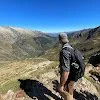
14 days in Tibet
Our ramshackle group of nomads finally crossed into China at the Tibetan border. Our first night was spent in the city of Gyrong, a medium-sized town that felt worlds apart from the China most people imagine. It sits at 3,600 metres at the foothills of the Tibetan plateau.
The town was a stark contrast to the chaotic streets of Nepal. Its avenues were clean, orderly and quiet. The occasional electric car would glide by almost silently, carrying ancient-looking Tibetans into the future.
Every lamp post bore a bright red CCP flag, the yellow hammer and sickle glowing in the early dusk. The light cast a red-orange hue over the sleepy town. Most of the restaurants were Nepali or Chinese owned. On the outskirts, lots were lined with fleets of electric cars waiting to be exported to Nepal.
The streets were quiet and almost empty. Many of the faces were unmistakably Han Chinese. Ancient Tibetan buildings had been converted into Chinese restaurants. Cameras and government apps tracked every movement.
We spent the night in what seemed like an upscale hotel on the edge of town. Half the group slept in their vehicles in the car park. Jacob and I took a room to share.
Every time we entered our room, the phone made a strange electronic click and turned itself on.
Hot showers and running water were a welcome luxury after the harshness of the high Himalayas. Jacob snored like a Norse black bear, making him a less than ideal roomie. The mornings were worse; like a good nihilistic German anarchist he enjoyed smoking ultra-strong Chinese cigarettes in bed whilst reading Moby-Dick. I appreciated his total disregard for his own health but knew this would soon grate a little.
We were to cross Tibet, Yunnan and finally reach Laos in fourteen days, with only two rest days. Over six thousand kilometres on some of the highest roads in the world. Not much time for sightseeing or freedom. Jacob and I began scheming ways to slip away once the convoy moved on.
Day 1 - Gyrong to Chinese Everest Base Camp
After a lacklustre Chinese imitation of a Western breakfast, washed down with weak coffee, we headed to the vehicles and began the first climb towards the high Tibetan plateau.
It had frozen overnight. The air was beyond crisp and the engines were slow to warm, as were our bodies. Rudolf’s huge Unimog belched a thick cloud of black smoke that swallowed the car park and forced the other drivers back into their vehicles. Jacob and I closed our visors and laughed. Eventually the engines caught their rhythm and the convoy rolled out.
We decided to hang back and let the slower vehicles take the lead. That gave us room to roam. We might have suffered the cold on the bikes, but we had speed.
The climb was abrupt. In less than an hour we rose from 3,600 to 4,800 metres. The deep green forests around Gyrong vanished, replaced by the lunar vastness of the high Tibetan plateau. Sparse, deserted, immense in scale. As we climbed, the air thinned and sharpened. It’s a strange feeling to ride at over 5,000 metres and still be dwarfed by the mountains around you.
Low-roofed villages of stone and mud clung to the landscape, painted white, black and maroon. Wood and yak dung were stacked neatly on their roofs. Even here CCP flags flew in every street. The roads were immaculately tarmacked, and cameras watched from quiet corners.
We zigzagged our way upward, riding from village to village, cutting off-road to explore the ruins of a forgotten Buddhist kingdom while the slow caravan crawled somewhere ahead of us, trackable by the black smog pouring from Rudolf’s Unimog and Anouk and Huibert’s old Toyota. The group soon christened them Big Smog and Little Smog.
Our joy was short-lived. The higher we climbed into the cold, thin-aired alpine desert, the more our engines suffered. Jacob’s carburetted 1997 Honda Africa Twin was the first to fail. First the battery died, then the ignition cable burned out. We managed to crawl into a small Tibetan town. Our attempts at bush mechanics failed, so we went looking for a local mechanic. Thankfully, every mechanic in the world knows how to fix a Honda. Had it been my Triumph, we would have been proverbially fucked.
I strapped a rope to Jacob’s bike and towed him through the neon CCP-flagged streets. Jacob sat defiantly on his broken steed, visor open, smoking a cigarette while I dragged him down empty streets. The locals double-took at the sight of two giant Norsemen roped together riding through their quiet town. We found a small garage owned by a Chinese mechanic dressed in a mishmash of a Chinese army uniform.
While Jacob oversaw the welding, I wandered around town. This place felt distinctly more Tibetan than Gyrong. Darker skin, round faces, warm smiles. The men wore felt cowboy-style hats and large turquoise and red stone necklaces. The women wore colourful yet sober robes. Children followed me playfully through the streets, curious about my height and pale skin.
The conditions at this altitude were harsh. No vegetation, no trees, little water. Yet the roads were clean, modern and perfectly tarmacked. Tibetans in traditional dress zipped past on three-wheeled motorcycles, staring curiously as they passed.
After a few hours of welding, we were back on the road. Our mechanical mishap had put us behind schedule. So it was throttle down and race to the Tibetan side of Mount Everest. Two hundred and sixty kilometres of high-altitude plateau riding at 130 kilometres per hour increased both the thrill and the chill. The Chinese tracking apps we had been forced to download flashed warnings for us to slow down. We ignored them.
Halfway to our first RV stop, we noticed that Rudolf’s Unimog was pulled over in a small Tibetan village. We stopped to see what was wrong. Tiny Rudolf jumped down from the cabin of his giant truck, shouting expletives in German. “They left us! They are selfish! What can we do? This is not correct! This is not what we do as travellers!”
His brakes had overheated, and so had his temper, bringing both the Unimog and Rudolf to a standstill. It was the first moment I saw clearly that his rage was not about the brakes. It was about control. About not being the strongest man in the room anymore. He had realised for the first time that he had bitten off more than he could chew with his Unimog. Fear had settled in and he blamed the world for his predicament.
Jacob tried to calm the angry octogenarian with little effect. The guides were behind us with the support vehicles and would help him get back on the road. We reassured him that he would be fine, but night was approaching and neither Jacob nor I intended to sleep in tents above 5,000 metres if we could avoid it. We left him with his insults echoing in our helmets.
We pulled into Chinese Everest Base Camp as the sun was setting, our bodies shivering in the cold. I had broken my discipline and started smoking again. The discipline that had felt solid a week earlier on the Vipassana cushion now felt fragile at altitude. The cold, the miles and the concentration had hijacked my nervous system. The others were preparing to take a tourist bus to the official Chinese version of Everest Base Camp for photos. The entire settlement had been built to accommodate busloads of Chinese tourists with supplemental oxygen bottles posing beside a rock marked EBC.
I passed on the outing. Only a week earlier I had been on the other side of Everest, dangling from a climbing rope. I was exhausted. The Vipassana insights were already fading. I needed nicotine to blunt the stress accumulating inside me.
A few hours later Rudolf arrived at the guest house in a cloud of smoke and fury. A loud argument erupted outside the hostel. I was too tired to care. I crawled into bed fully layered, bracing for a thin, restless night at altitude without acclimatisation. I could hear Carlota and Rudolf bickering over the sound of the Unimog’s idling engine before drifting into a heavy, exhausted sleep.
Day 2 - Chinese EBC to Shigatse -
I woke with icy breath and burning lungs. Jacob’s bike needed nearly an hour to warm up before we could leave. Rudolf’s Unimog spat clouds of black smoke into the thin air. The group dynamic was starting to fray. Altitude strips politeness from people. It leaves ego exposed. Rudolf had locked himself in his truck, claiming we had abandoned him and that we were all “Scheiße Menschen”.
Thankfully, Jaime, her husband and a trained mechanic, managed to repair the Unimog. We decided that Carlota and the Unimog would ride close together so Jaime could assist if needed. It made sense. They were the biggest and slowest vehicles. The rest of us rode ahead at our own pace, relieved not to be caught in Rudolf’s anger.
The day’s route ran from Everest Base Camp to Shigatse, Tibet’s second-largest city after Lhasa. Three mountain passes above 5,200 metres. One hundred and eight hairpin bends. Time to send Tara into the heavens.
The cold bit through my gloves. I was wearing every layer I owned and still the Himalayan air found its way in. Jacob’s Africa Twin struggled again; above 4,800 metres the carburettor repeatedly failed. At the top of each pass we had to flag down Jaime and the team for help.
Snow began to fall on one of the passes where we had already spent an hour fixing the bike. At the same time, Rudolf’s Unimog broke down again, this time the air compressor failing. He took no responsibility for his choice of vehicle or his lack of mechanical knowledge and instead blamed Carlota and Jaime. Carlota hovered on the edge of tears. Edward and Tashi, our guides, looked exasperated.
I kept my distance and watched the unfolding drama with Andy and Dawn, sensing this was only the beginning of our issues with Rudolf. We shrugged at the drama and tried to remain stoic and pragmatic. Once the repairs were complete, we descended toward Shigatse. We arrived cold, drained and silent.
Shigatse was our first stop in a moderately large city. The roads were wide and clean, bright neon signs hanging above every shop. It felt anachronistically modern. We spent the night in a large hotel full of ornate Tibetan wood carvings for ten dollars a night.
Trevor and I went for a walk through town, determined to try some local cuisine despite arriving late. We ended up in a Chinese seafood restaurant that looked more like a national aquarium than a place to eat. Large tanks filled with crabs and baby sharks lined the walls. The staff looked at us as curiously as we stared at the fish. After a brief deliberation, we opted for noodles elsewhere rather than seafood in the middle of the Himalayas.
When I returned to the room, exhausted and desperate for sleep, I found Jacob, Mara, Huibert and Anouk sitting on my bed drinking beer and smoking. I lost my sense of humour and snapped. The nicotine, the thin air, the constant vigilance had shortened my fuse. I could feel myself becoming reactive in the same way Rudolf was, just quieter about it. I felt like Rudolf and immediately apologised. I was tired. I wanted silence. They sheepishly moved the party to the lobby. I collapsed into tobacco-scented linen and fell into a deep sleep.
Day 3 -4 - Shigatse to Lhasa – The last of the high passes
Another gruelling 360 kilometres of high mountain passes. As we rode out of the city, snow began to fall. The high desert plains were covered in white. Jacob and I sighed and mounted the bikes, envious of the rest of the convoy in their heated cabins. I silently thanked whichever god might be listening for the heated grips I had installed on Tara in India. Jacob was not so lucky.
As we climbed toward Tibet’s second-highest mountain pass, Jacob’s bike failed again, promptly followed by Big Smog. Another fallout ensued, this time a serious one. Rudolf could no longer contain his rage at the group and exploded. It was no longer about vehicles or logistics. It was about pride. He had built his identity around being capable, independent, unbreakable. Tibet was dismantling that illusion in front of all of us.
Andy and Dawn somehow managed to mediate and calm the situation. I was freezing. Jacob chain-smoked. Huibert and Anouk sniggered at Rudolf’s outbursts. Theo and Mara stayed clear, while poor Carlota and Jaime bore the brunt of it. Carlota suddenly broke down in tears and retreated into her campervan. We had all given up on Rudolf; his temper was unmanageable. Edward and Tashi did their best to contain him as we rode off.
The cold had gotten to me, so I pushed ahead to find warm tea and descend from the altitude. On the way down I lost the convoy and ended up riding solo into Lhasa. It felt good to ride alone, away from the drama. Alone on the bike I did not have to perform strength, patience or leadership. I could simply exist.
I arrived in Lhasa feeling refreshed and completely taken aback by how modern Tibet’s capital looked. Tall Chinese skyscrapers dwarfed the Potala Palace. The outskirts were an example of hybrid Chinese capitalism: Audi, Honda and BMW dealerships rising beside glass towers. Lhasa was a bustling, almost silent electric city. Surveillance outside. Voltage inside. My own nervous system humming just as loudly. It felt as though I was the only petrol engine left, loud and out of place.
I rode into our hotel straight into another conflict. The younger crowd of our dysfunctional caravan were arguing with hotel staff. Mara, Theo, Anouk and Huibert, keen to save money, had decided to camp in the car park. The problem was that it is illegal for foreigners to camp anywhere in Tibet. They refused to listen and nearly forced the authorities to be called, putting our guides in an impossible position. Tashi was at the end of his tether, having just dealt with Rudolf’s tantrums only to face another crisis. Watching him, I realised we were not travellers anymore. We were liabilities in someone else’s system.
Andy, Dawn, Jacob and I tried to calm everyone down, frustrated that the younger group could not accept that the law was the law. Tashi’s livelihood was at stake; he could lose his guiding licence or worse. In the end we got the kids to agree to share a room, which they were pleased with, and just left Rudolf to his own designs. After tensions eased, Jacob and I went out for chicken heads and feet, washed down with a few Tsingtao beers and followed by a foot massage that nearly turned into an involuntary happy ending in what we realised was a triad-owned brothel.
The next morning I tried to bridge the peace with Rudolf at breakfast. As I approached him and asked what was wrong, he jumped from his chair and, from the height of his five-foot-two frame, began poking me in the chest.
“You think you are the boss?” “You are not my boss! You can’t tell me what to do!”
He puffed up his small chest and jabbed a finger into me. I was taken aback by this ageing man, trembling with fury. He stormed off in a cloud of expletives, his meek yet vindictive wife Olga in tow.
The rest of us headed to visit the Potala Palace, once the seat of Buddhist spiritual and political power and the home of the now-exiled Dalai Lama. It felt strange to have ridden from Dharamshala, where I had met Tibetans in exile, to see what had become of their former centre of gravity. The palace had been turned into a museum where thousands of Chinese tourists queued for photographs. A kind of Tibetan Disneyland for the emerging Chinese middle class.
As we walked through its courtyards, a battalion of Chinese soldiers entered on a tightly choreographed cultural visit, imposing their authority. The building itself was magnificent, white, maroon and black. Pilgrims circled outside, prostrating themselves in the traditional clap-and-crawl prayer. Some had travelled hundreds of kilometres that way to show their devotion. The mix of tourists and believers felt reminiscent of the Vatican on a busy day.
The palace also held over three and a half tonnes of gold. The irony was difficult to ignore. It seemed that the monks were happy to preach detachment to the locals, especially if it related to their gold. Afterward we wandered the old town: KFC signs, Chinese influencers in imitation traditional dress filming content for WeChat, devotional pilgrims threading between them. I retreated to my room. More cigarettes. More drink. Sleep.
Day 5 - Lhasa to Lulang – Lower Tibet
Another early start. Four hundred and seventy kilometres of motorway. Tempers had calmed. We settled into the long-distance grind. I put on a podcast and drifted down from the plateau into lower Tibet.
I met a kind Chinese biker, Jiang, who decided to share some road with me. He was courteous and open. We laughed at our miscommunications; he joined us at the hotel that night. We rolled into a small Tibetan village in the lowlands, surrounded by green pines in a lush valley. Spring was beginning. Flowers scattered the valley floor. In the centre of the village stood the local CCP headquarters with a giant hammer and sickle mounted on its roof.
We ate traditional Tibetan hotpot and danced. For the first time in days, people relaxed. Rudolf and Olga stayed in their camper.
Day 6 - Lulang to Passu – Down we go..
The next morning I walked the valley, followed by a fluffy Tibetan mastiff. I meditated on Jizou Rock, said to be the rock of a Tibetan king. Jacob and Jaime were again working on Jacob’s failing bike. I decided to ride out early to take photographs.
As I turned through a narrow village street, I was suddenly on the ground. A black rubber blur flew past my helmet. I felt Tara’s weight pinning my leg. For a second I was outside my body, watching myself dragged by the truck that had pulled blindly into the road.
Then it stopped. I was back in my body, somehow intact.
Andy, Jaime, Dawn and Tashi all ran over to help me. Jiang, the Chinese rider who had joined us the night before, helped negotiate with the driver. It was handled quickly and smartly. Money exchanged hands. The front of the truck was destroyed. My ego was bruised. Tara was damaged.
My handlebars were twisted. Mirrors destroyed. Luggage torn, including my top box. More than that, something inside me had shifted. I felt shaky and vulnerable; it wasn’t about the bike or the damaged bags. The crash had opened something in me that I had held together with zip ties and black tape. There was no time to process it. We had another five hundred kilometres to ride.
There was no other option but to get back on the bike and ride on. But in truth I wanted to give up. I felt exposed. Fragile.
As I rode, the adrenaline faded and something heavier took its place. I realised I missed home. I had been on the road for a year. I was grateful to be alive, but I felt alone. I missed my friends. I missed being loved and feeling safe. I missed having an identity that wasn’t constantly in flux. But deeper than that was the realisation that I was lost. That I was running. That hurt more than the crash.
A few hundred kilometres later, my gear began falling off the bike. Saddlebags came loose. Thankfully Andy and Dawn were close behind and helped me reload everything.
As Tara’s rear wheel wobbled, so did I. The mechanical instability mirrored the internal one. I was coming down from the roof of the world and felt dangerously close to falling into the gutter.
Later, at the top of a mountain pass, my top box detached and tumbled off the bike. It too had been weakened by the crash. Luckily Huibert and Anouk were behind me in Little Smog and retrieved it from the pass.
I followed them into Passu as night fell, the roads scattered with herds of yaks descending from the mountains to shelter and feed. Anouk and Huibert’s car began pushing out more black smoke than Big Smog. I was suffocating in the darkness behind them with a bent wheel, compromised gear and a growing existential fracture.
I was slipping. The mountains had lost their grandeur. Rivers glistened less. I had run out of antidepressants and was self-medicating again.
That night I downed a bottle of soju and chain-smoked a full pack of Chinese cigarettes. As we passed the bottle around and smoked ourselves into a coma, Jacob fell asleep and snored beside me, the room thick with stale cigarette smoke. He was a wild man. Drinking, smoking, somehow still upright on his motorbike. I envied his stoicism and ability to objectify the world. His German stoicism contrasting with my French romanticisation, we drifted in a haze of blue smoke and strong soju.
Day 7 - Passu to Deqin: The source of the Mekong
The next day I woke feeling shaky. I had told Imaan about my crash. She responded with an “I hope you get better soon.” I sent her a few hurtful messages in response to her coldness. Hurt people hurt people. I was suffering. She blocked me. That was the end of it.
Sam had also sent a long message. The woman I had loved so deeply and betrayed so badly. I knew I had to let her go. It was all too much. Kate had also blocked me. I was far from everyone I loved, and it seemed that everyone I loved wanted me far from them.
It was all catching up with me. No sleep. Altitude sickness. The past, rejection and confrontation. Anxiety tightening its grip. Sam’s anger still ringing in my ears. That was it. I was single. Cut loose. Or cut off. My eyes stung with exhaustion.
We had 370 kilometres to ride on the Himalaya 318 Road, arguably one of the best roads in the world. With my gear offloaded it felt incredible, lighter, freer, almost playful on the throttle. Light of physical baggage, heavy with emotional weight.
I still felt afraid on the road. I missed home. How do I build that within? How do I find inner strength instead of chasing it across continents? I told myself I had to take refuge again in the Triple Gem, in the Buddhist lessons I had learned during Vipassana, but the cracks in that roof were already letting in the winds of despair. My discipline was gone.
I kept reminding myself that “I was living the dream.” I was riding on the roof of the world, yet why was I feeling so low? Where was I going next? What was I actually heading toward? What was the point of it all? I couldn’t stop my mind from going into hyperdrive.
My mind was scattered. I needed a break.
Part of me wanted to be alone. Part of me wanted to be free of everyone. I missed Sam. I missed Imaan. I missed having someone who simply cared.
I was tired of being alone.
Then, out of nowhere, Du called. He said he would come and meet me. The last time I had seen him was in Afghanistan, when he had vanished after his wife discovered he was sleeping with the local kung fu teacher. Now he was three thousand kilometres away and planning to ride overnight just to see me.
At a petrol station earlier he had argued with the attendant. In Tibet the rules were rigid: park the bike one hundred metres away, fill a jug, carry it back, fuel the bike, return the jug. German efficiency collided with bureaucratic theatre. I did not have the energy to engage. I was too tired to argue.
So I left alone in the cold.
Another 5,000-metre pass. I felt sick with fatigue. My thoughts were slow and heavy. At one point I cried inside my helmet. Sam’s words cut deep. Imaan’s silence made me feel erased. I kept telling myself I had to free myself from all of it.
The road was extraordinary. Snowfields, woodlands, white-painted Tibetan houses clinging to hillsides. It should have been enough to lift me. It barely touched the weight I carried. Another Red Bull in a valley. Another cigarette. I was crawling along at fifty kilometres per hour, fighting to keep my eyes open. I just wanted to sleep.
I aimed for Deqin, the Himalayan salt village, and booked a single room. No Jacob’s snoring. No smoke. Just silence.
We reached the village at the source of the Mekong, a deep brown river pushing down from the plateau to feed the whole of Southeast Asia. The air carried the tang of salt from the flats where Himalayan pink salt was harvested. It would be our last night in Tibet.
We drank Tibetan wine. Smoked more cigarettes. I felt hollow.
Then Du arrived.
He rode in late on the same motorbike I had crossed Afghanistan with him on. I could hardly believe he was there. He had travelled two thousand kilometres in three days just to see me.
The sadness lifted almost instantly. People did care. The journey was about to take another turn.
Day 8 - Deqin to Shangri-La – Things are not always what they seem.
Warmth at last as we descended from the Tibetan Plateau along the upper Mekong. Du, Jacob and I split from the convoy. We were out of Tibet now, free to roam. The only condition was to reach Laos within four days to stay inside the permit window. Otherwise, we answered to no one. Du took the lead. We fell in behind him.
The first hours were easy and pleasant. Then the kilometres became monotonous. More mountains. More passes. The relentless pace was exhausting. Eventually we crossed into Yunnan province. The culture still felt heavily Tibetan, Buddhism woven into the architecture and the rhythm of life, but the atmosphere had shifted.
We rolled into Shangri-La. The city felt like an oriental theme park version of the myth it borrowed its name from. Tourists and locals alike rented tailored traditional outfits and posed for endless selfies. Polished statues depicted monks handing Tibet peacefully to the CCP. History repackaged for consumption.
Du hosted us generously. Good food. Laughter. Wandering the streets together, I was reminded how much I enjoyed being around him. His swashbuckling energy. His irreverence. The chaos we had shared in Afghanistan. With him I did not have to explain myself. He knew me. A brother.
We separated from the rest of the group and created our own itinerary. We stayed in a biker lodge, went out for drinks. I was smoking and drinking again. No meditation. Anxiety hummed quietly beneath everything. Sam’s anger still cut. I spoke to Nick, Kate’s new husband, and he told me I was being too negative. I felt completely untethered from home.
Where is home? What is home?
Imaan’s silence still stung. I felt lost and needed to regain some inner strength.
The next day I went to fix the bike, to deal with the wobble in the rear wheel. I half-hoped I could fix the one in my mind as easily.
Around us, newly built temples and old façades blurred together, designed to lure in domestic tourists. Influencers in costume filmed content for social media. It was a strange city, artificial yet vibrant.
But Du’s energy was infectious. His positivity cut through my gloom. I was grateful he had come.
For a moment I felt defiant.
I forget them all, I forget myself I was my friend.
Day 9 - Shangri-La to Lijiang – Shabila is back!
Du was the breath of fresh air I needed. He took Jacob and me under his wing and introduced us to the world of Chinese motorcycling. Every city in China had a bespoke motorcycle club that any rider could roll into. They all had secure car parks, work benches, cheap and very modern rooms for ten dollars a night. Entering the clubs as foreign riders drew lots of attention that we all reveled in. We left Shangri-La feeling a bit hungover but overjoyed at finally being reunited. The shared intensity of our time riding in Afghanistan had bonded us. Strangely, Jacob had met Du in Iran months earlier, and the penny dropped when they met again. The world of motorcycle adventurers is a small one at times, despite the vastness of the distances we cover.
We had broken away from the group, no more Rudolf and his madness, and temporarily my mood had lifted at being around my friend. We rode off from Shangri-La to Lijiang, the last of the high mountain cities before descending from the Himalayas into the Southeast Asian jungles. I split from Jacob and Du to spend the day with the rest of the convoy to maintain good diplomatic relations and check in. They had found a campsite on the outskirts of town and seemed happy to be camping in the fresh air. The owner of the campsite was a Chinese redneck who owned a giant Harley Softail and a Honda Goldwing. He insisted I take them out for a ride. The atmosphere in the campsite was jovial and warm. The Chinese were so kind and curious to meet us all. The owner even took us out to a shooting range, promising us we would fire AK-47s. Andy, Jaime and Trevor were over the moon. Their excitement only matched their disappointment when we realised the rifles were actually Chinese .22 calibre imitations. I left the caravan to meet Du and Jacob in the city centre and arrived at the biker hotel, where the owner invited me to have dinner with his whole family. We exchanged bracelets and hugged strongly afterwards. A strange bond had formed between us. I felt like we might have known each other in another life.
Day 10 - Lijiang to Dali – Chinese bikers
Two hundred kilometres of motorway riding to Dali, the largest historical town in Yunnan. Du had arranged for us to stay at the largest biker headquarters in the city and found a place to fix the wobble in my rear tyre and a tailor to repair my ripped bags. The place was huge and accommodated at least thirty motorcycles. We had our own tatami-style rooms. There was a gym, a pool table and a bottomless bar. Jacob was in heaven. We went out that night. Du was in trouble with his wife for leaving so abruptly. He blamed it on us, the “shabi laowai”, stupid foreigners, which by then had become our nicknames, raising eyebrows from the elders and smiles from the youngsters when we introduced ourselves. That night we hit the town. Du was on his phone most of the time trying to appease his angry wife. When he finally put his phone down, his mistress appeared on her bike, the kung fu teacher. He was incorrigible. He looked at me with his mischievous smile. “I’m in trouble now!” he laughed.
We spent two days in Lijiang, just resting, drinking and playing pool. Our biker friend put on a huge spread for us on the last night. It felt good to just let go, get completely drunk and forget all the pain I had let bubble up. Also forgetting that we had a 450 km ride to Pu’er the next day if we wanted to make it to the Laotian border in time before our visas ran out.
Day 11 - 12 - Dali to Pu’er – Hungover tea
Riding almost five hundred kilometres hungover was a sharp reminder of why I didn’t drink anymore. The crash from the booze hit me twice as hard. Drinking and depression don’t mix well, a cocktail of darkness the next day. I was unable to enjoy the sweet change of air from the high Himalayas to the Southeast Asian lowlands. The air was rich with scent and new aromas, thick with oxygen and life. Suddenly we cleared the pines and were riding suspended highways above the jungle canopy beneath us. I was blaming Jacob in my helmet for all the drinking and smoking. In truth it was my responsibility. I made the choice to run away from my pain and cover it with booze.
We made it to Pu’er at night, wandered around its huge outdoor markets, happy to be wearing T-shirts at night again. We ate some fried scorpions and pig brain. I was exhausted. The constant riding meant we had covered 5,500 km in thirteen days with only two days off, and those had been spent drunk. I just wanted to get to Laos to sleep, eat, train and return to my healthy habits, or so I thought. Pu’er was renowned for its teas. We attended a tea ceremony and took part in some communal street dancing that night. No beer for us this time, we were all spent. It was time for an early night. The hangover and lack of sleep caught up with me. I bid my farewells to Du. This is where our paths would separate, not knowing when I would see my wild friend again, only that I would miss him. We hugged and he sped off with his mistress in tow.
Day 14 Pu’er to Laos – welcome to the jungle
We left Pu’er in the morning heat after three fake Chinese Red Bulls and a cigarette. The roads were immaculate and brand new, Chinese suspended motorways hanging in the endless jungle canopy of Southeast Asia. Long tunnels cut into the mountains offered us some freshness from the growing heat, our bodies still not accustomed to the humidity. We arrived at the border early, sweaty and tired, our jackets off and our pale white skin exposed to the infernal heat of the north Laotian jungle. It was spring, the hottest month of the year. Ahead of us the tarmac ended and the dirt roads of Laos awaited. Our fourteen days in Tibet had ended. I still clung onto the notion that if I only made it to Laos everything would be ok, not learning the lessons from Shangri-La.