Enter the dragon
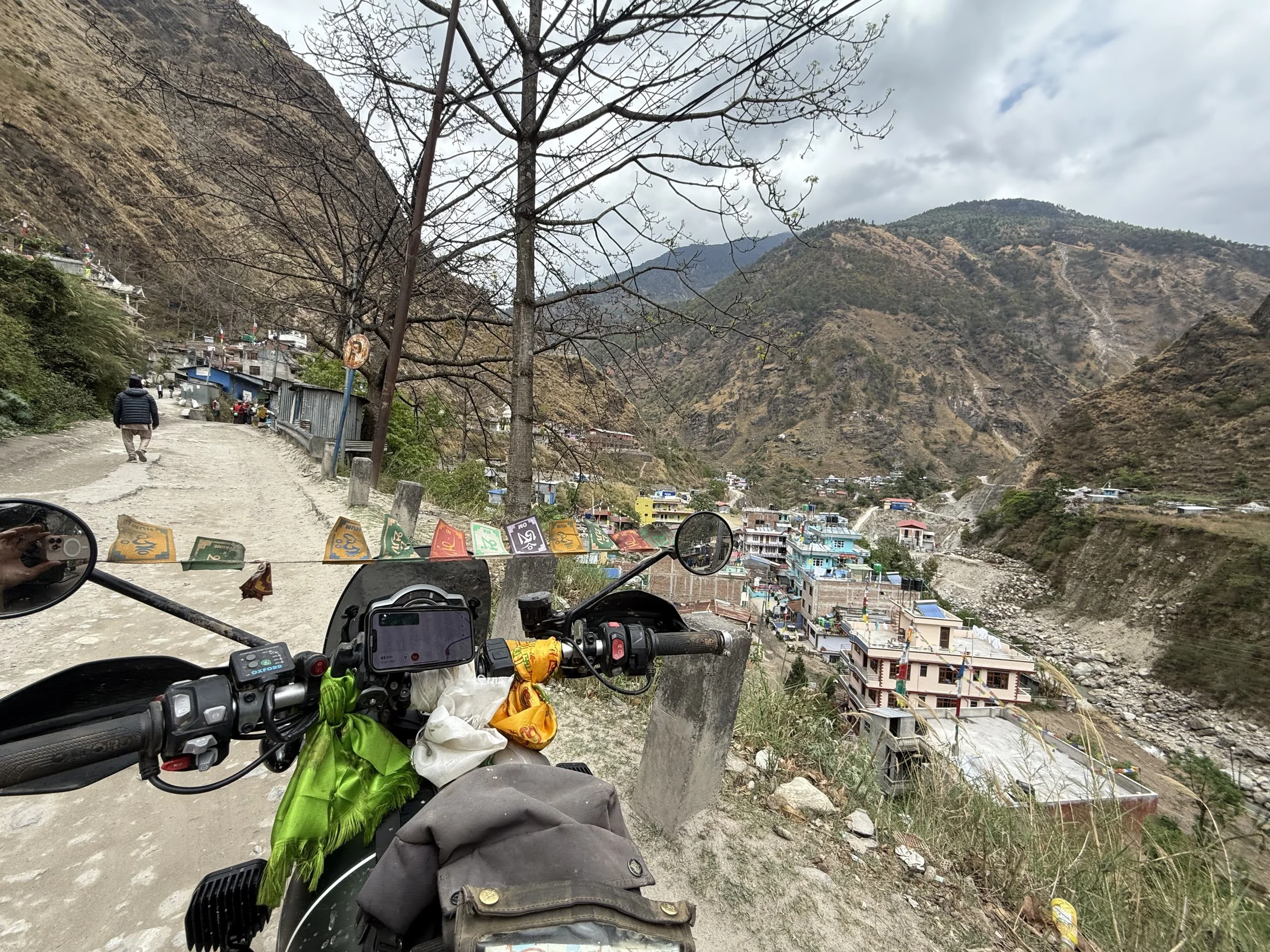
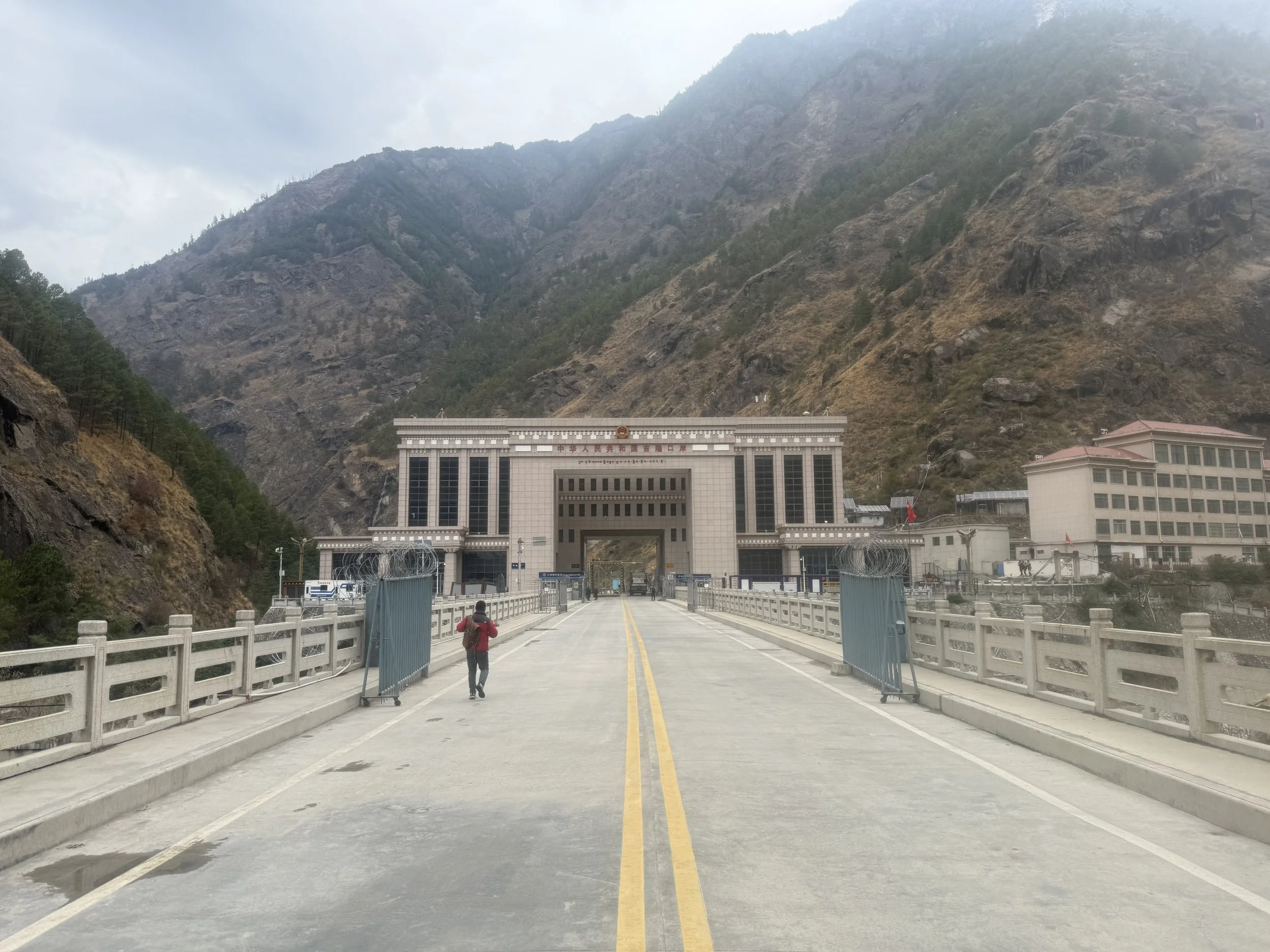
Entering China from Nepal felt like stepping into a time machine. On one side was a deeply spiritual land, steeped in superstition and wrapped in poverty. On the other stood opulence and power, saturated with hyper-materialism. The gates to China were imposing, imperial and modern. A towering newly built structure loomed over the ramshackle Nepali village that formed the border. On the Nepalese side, multi-coloured prayer flags fluttered in the valley winds. On the People’s Republic of China side, red communist flags snapped violently in the same air.
I had arranged to meet a group of travellers to enter Tibet together. The Chinese government was still cautious about allowing foreigners to roam freely across the region. Crossing Tibet required an official guide vetted by the CCP and a fixed itinerary. It had become a funnel for overlanders trying to move from the sub-Indian continent into Southeast Asia over land.
The civil war in Burma had closed the southern route entirely. Despite my efforts to negotiate passage with Chin rebels in the north, I had hit an immovable wall in the form of the Burmese army. The rebels had guaranteed my safe passage through their territory but were blunt about what would follow. Once beyond their protection, detention was likely. Death was not off the table. My experiences in Afghanistan and Russia had dulled my appetite for unnecessary risk, so China, for all its constraints, became the least dangerous option.
It was also expensive. Only two companies operated the route and they charged accordingly. A single vehicle crossing from Nepal to Laos was quoted at over four thousand dollars on the shortest itinerary. Costs dropped as more vehicles joined, so the task became assembling a group.
Weeks of negotiation followed through overlander WhatsApp groups. I eventually found a newly formed company offering significantly lower rates. A splinter operation breaking away from the existing monopoly. The established firms immediately began bad-mouthing the newcomer. Edward its founder was lambasted with accusations of being a depraved, unreliable drunk. It felt reactionary, defensive. I sided with the underdog instinctively. I have always trusted those who just need a chance. I have lived on second and third chances myself. I was not about to deny one now.
The group was sceptical, understandably. We all had a lot riding on this crossing. Overlanders are famously frugal. Most have sacrificed careers and income to be on the road. A rare few live off passive income. The rest have sold their belongings, set strict budgets, and constantly calculate burn rate. But money was not the real fear. Time was. Time lost at a border could derail onward travel through Southeast Asia and beyond. That was the real currency.
In the end, the deal was struck. We committed to the new company, Drive China. It was a risk, but it cut the cost almost in half. An offer too tempting for the tribe of cheapskates we were.
We were to meet at the Tibetan border, a few hours north of Kathmandu. Our caravan was small but absurdly varied. Two motorcycles, two converted vans, a camper van, a Unimog, a battered Land Cruiser, a silver hatchback, and one cyclist.
The first person I met was Jacob. A German schoolteacher on a gap year, built like a Bavarian techno Viking, beard thick, arms and chest layered in tattoos. He rode a 1997 Africa Twin with a baby yak skull bolted to the front fairing. Jacob drank hard, smoked constantly, and carried a nihilistic humanism shaped by Marxist theory and lived excess. Funny, sharp, deeply human. An oddity for a German. We met in a border hotel and became fast friends over conversations that jumped from ideology to drugs to the absurdity of borders. Had it not been for my recent Vipassana retreat, I would have happily joined him in his indulgences. Instead, I watched. We shared a room, ate our last Nepali momos, and waited for morning.
That night, an American family checked in next door. Andy, Dawn, and their son Trevor from Oregon. Seasoned travellers in their early sixties, calm and quietly competent. They had already crossed Europe and Africa in their converted Toyota and were now finishing Asia before heading home to south America and eventually home to Bend Oregon. Andy was practical and dryly funny, the sort of man who always seemed to be fixing something. Dawn was observant and gentle, more often watching than speaking. Trevor, their son, had joined them for this leg. A software engineer by trade, restless adventurer by nature. At the time, they were just neighbours in a cheap hotel. I had no idea how important they would later become to me.
Sleep came lightly. My mind filled with images of Tibet. Desolate high-altitude deserts. Monasteries. Thin air and silence. Beneath it all, something darker stirred. Imaan had stopped replying to my messages. The familiar spiral crept in. Doubt, abandonment, self-loathing. The clarity I had gained in the mountains began to fade. I was about to enter one of the highest places on earth and staring at the edge of my own abyss.
In the morning, Jacob and I rode toward the border gate. The Chinese structure towered above the fragile Nepali buildings like a statement of intent. We gathered at a chaotic border post, scrambling for exit stamps amidst line skipping, shy smiles, and shouted instructions.
A voice cut through the noise.
“Hola todos! Vamos a China! Abrazo!”
Carlota arrived in a flurry of warmth and movement, followed by her partner Jaime and their three young children. They were driving a standard camper van from Ibiza to Australia and had crossed the Middle East and India with toddlers in tow in less than four months. Exhausted but buoyant, held together by humour and momentum. Carlota greeted everyone as if we were family. Jaime watched quietly, taking everything in.
Others followed. Theo, a tall, relaxed Swiss man who had driven from Zurich through Iran. Anouk and Huibert, a Dutch couple in an ancient Land Cruiser that belched black smoke like a health hazard. Rudolf and Olga, an elderly German couple in their enormous Unimog, the vehicle dwarfing its anxious, wiry driver. And finally Marah, a young Portuguese cyclist and artist who had already crossed South America alone and was now aiming for Australia. Fearless, disciplined, quietly powerful.
I looked around at our assembled caravan and wondered how this collection of humans and machines would survive six thousand kilometres across the highest plateau on earth.
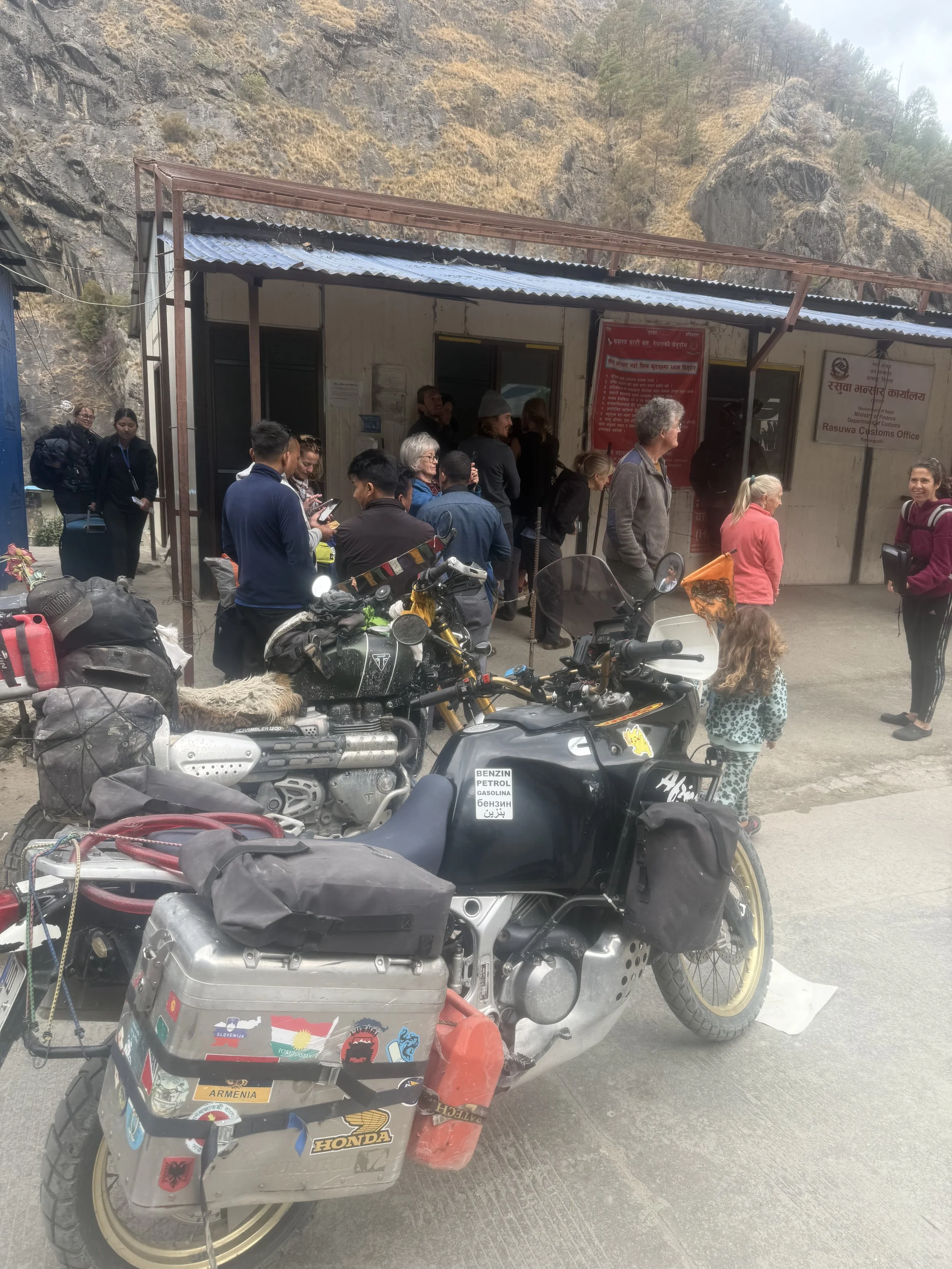
Carlota moved through the group counting heads, checking on people. Because I had organised the crossing remotely, I found myself drifting into an unwanted leadership role. Fourteen years of herding cats in uniform had left me allergic to it. I was eager to hand responsibility over to our guides.
Once our passports were stamped and the vehicles cleared, we rolled forward together beneath the imperial Chinese gate. As we crossed out of Nepal, the air seemed to tighten around us. Dirt gave way to smooth tarmac and mounted CCTV cameras followed our movement from every corner.
We were ushered into passport control by a stern Chinese official flanked by two border patrol agents in full riot gear. Their equipment was immaculate, body cameras fixed to their chests, recording every interaction. Each one of us inputed into their biometric scanners. It felt less like a border crossing and more like an intake process.
Compared to the twenty or so borders I had crossed before, the Chinese post felt like an airport terminal. A large sanitised waiting room with metallic benches, spotless and air-conditioned. Cameras watched from every corner. Not threatening, just total. We were politely but firmly instructed to sit while we were vetted one by one. The staff were coldly efficient, a stark contrast to the Nepalese officials we had just left behind, disorganised and chaotic but deeply human and warm.
Andy, Dawn and Trevor drew immediate attention. American passports always do. Our phones were taken away and searched. We were checked for intellectual contraband. Any book deemed subversive was confiscated. Andy lost a book by a US investigative journalist who had once written critically about China.
As phones were collected, panic crept in. I had forgotten about the military photographs still buried on my device. I deleted what I could and shut down my social media accounts before my phone was taken. Fifteen minutes later it was returned. There was no way of knowing what had been accessed or inputted.
We were instructed to download WeChat and Alipay immediately. Cash was effectively useless. Payment, communication, transport, daily life all ran through these two apps. Participation was not optional. Surveillance no longer required shadows or pursuit. Control was digital, efficient, and quietly accepted.
The processing was quick and precise. The officials never smiled. They were not cruel, just absolute. It felt like an omen.
One of the guards smiled at Carlottas two year olds’, the mask fell off for a minute, they were human after all.
When we stepped outside, it was as if we had crossed into a different world. Wide tarmacked roads stretched away from the border, traffic lines crisp and unbroken. Clean car parks, modern storefronts, fast food chains. People moved with confidence, well dressed, absorbed in their phones.
A group of Chinese tourists swept past us in long tailored coats and oversized sunglasses, laughing loudly, stopping to take selfies. Glossy, self-assured, perfectly at ease. We had not just crossed a border. We had entered a system that worked flawlessly, and demanded compliance without ever asking for it.
We were greeted by Alex, Edward, and Tashi. Their chosen Western names were offered easily, as if translation extended to identity itself. Edward stood smiling with a Chinese Starbucks cup in hand, dressed in a modern cotton business suit, bookish glasses framing an open, confident face. He was nothing like the alcoholic degenerate his competitors had tried to paint him as. Alex stood beside him, petite and sharp-eyed, her dark hair and wry smile offset by flawless English learned during university in Manchester. And then there was Tashi, our Tibetan guide. Broad-faced, deeply tanned, wearing a white puffer jacket, washed jeans, and Nike trainers. He looked more Nepali than his mainland colleagues, and he smiled easily.
They gathered us in the modern car park, gave a brief orientation, posed for a few photos. Prayer flags were exchanged. Engines were started.
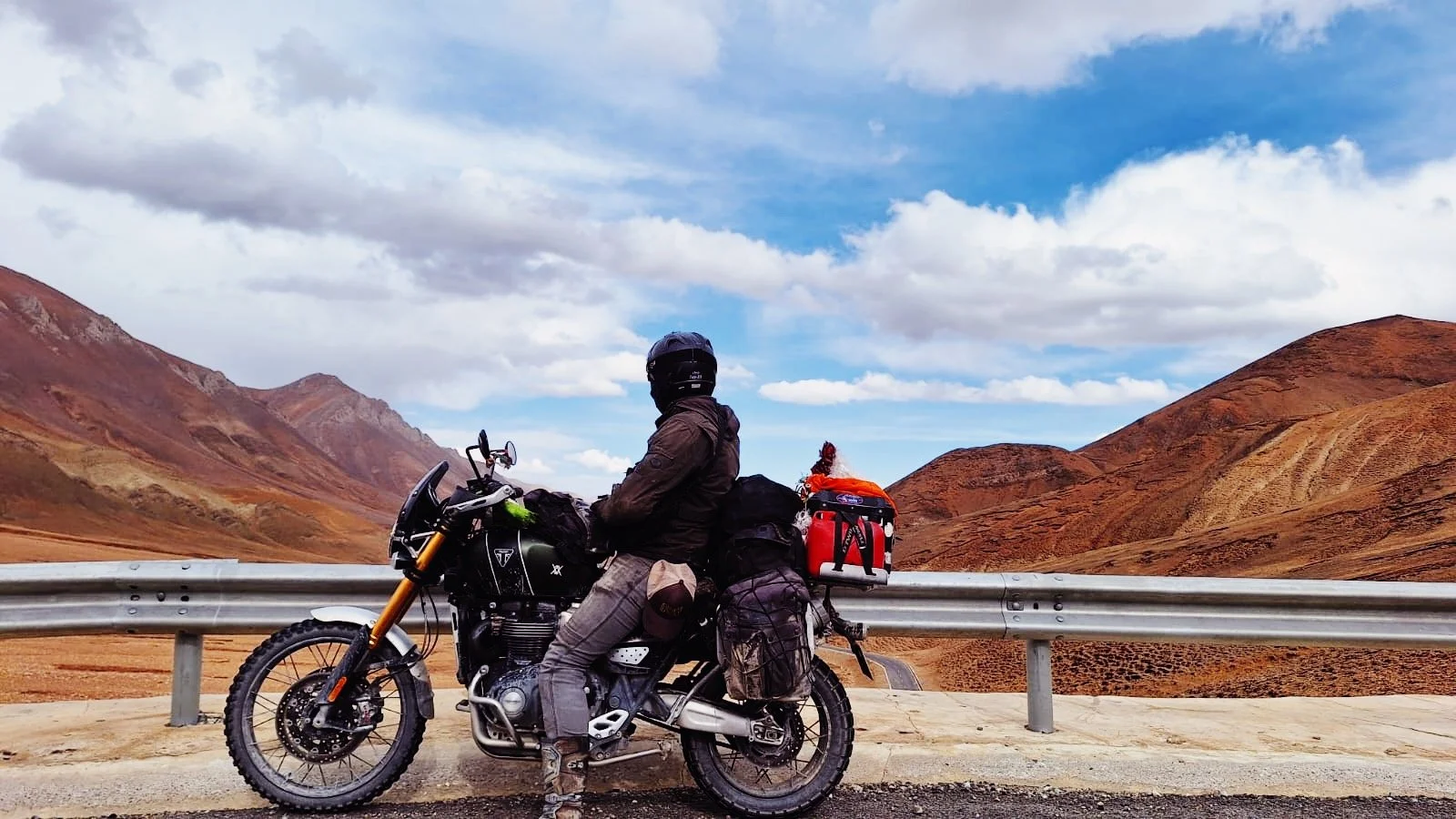
We set off into lower Tibet, to the town of Gyrong the foothold of the highest land in the world. I feigned excitement but something in me had broken, I suppressed the feelings, started my engine revved tara and set off.