Everest Base Camp
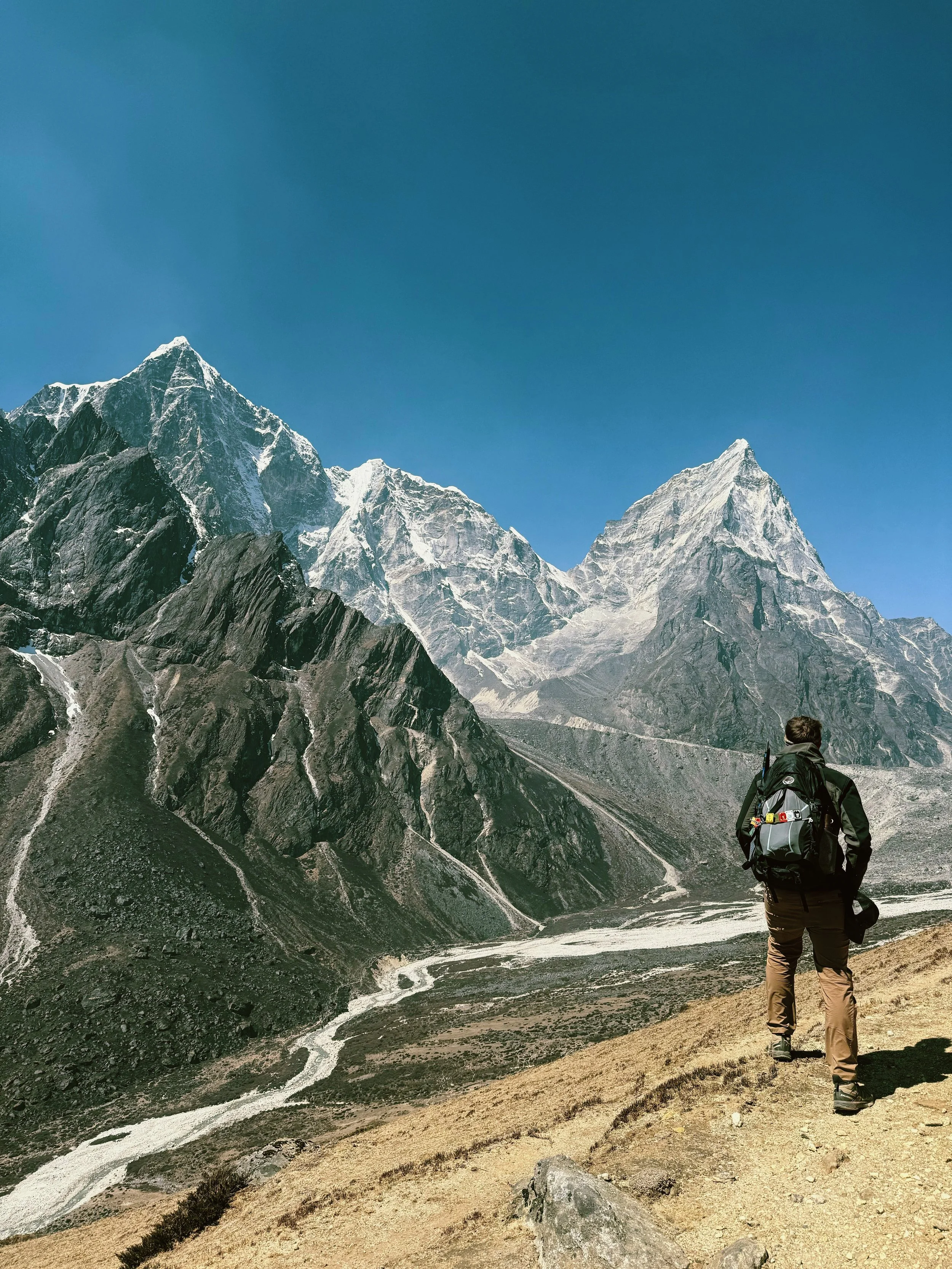
The day after acclimatising at five thousand meters I took a rest day in Dingboche at Mima’s place. A day of sorting gear for Lobuche East. Ropes, crampons, ice picks, jumars. Once the admin was done I wandered through the hamlet. These small Nepalese villages breathe in rhythm with the trail. Busy in the mornings when hikers leave. Busy again in the evenings when new ones stumble in. The middle hours sag with stillness.
A group of Israeli kids were staying at Mima’s. I usually found Israelis on the road insufferable, loud, entitled, rude and aggressive. A generalisation, yes, but one reinforced enough times for me to believe it. They were no different. Five young men in their mid twenties in a mix of climbing kit and tactical gear. I felt a prang of jealousy and a sadness too.
The war in Gaza was raging after the October 7 attacks. I imagined they had just finished a rotation and were on RnR. Then it hit me how much bias I carried toward them. They were no different than I had been at their age. Caught in history far bigger than themselves. Born into a world where older men send young men to die for their ambitions.
Blair and Bush had misled the west into a conflict that lasted over twenty years. I had joined the military under the same cloud of anger and desire for vengeance after the waves of terrorism that swept through the west after 9/11. They were no different.
So I dropped the judgement and started talking to them. IDF paras, recently back from ops. Young and burned out. I felt sorry for them. After a few pleasantries one of them said, We fight for each other, not for the hierarchy. The words hit me hard.
We sat in silence for a while, contemplating the mountains, all of us here to push ourselves and recover from something. Their bond stirred something in me, a reminder of a life I had stepped away from. I needed air.
I walked out into the emptied streets of Dingboche. Villagers moved slowly with the weight of the altitude. Yak caravans threaded through the narrow stone paths, bells ringing under their thick woolly necks. A herder’s shout echoed now and then. Life moving at the pace of breath.
I ducked into a coffee shop full of fat, entitled tourists. My judgement flared again. I walked straight back out and headed for the hills.
It made me look at my own behaviour on the road. The Khumbu had its own hierarchy. Climbers at the top, trekkers in the middle, tourists at the bottom, and Sherpas carrying all of us whether we admitted it or not. I pretended I was above it, but the truth was that I cared deeply where I sat in that unspoken ranking. I wanted to be seen as strong, as capable, as a man with purpose. Judgement was just camouflage for insecurity. I had come to the mountains chasing something like absolution, but standing there I felt like every other wanderer trying to convince himself he deserved to be here.
I used to see myself as a traveller and would get offended if someone called me a tourist. How dare they, I would think. Do they not know what I went through to get here. I did not hop on a jet holiday package for a week. I am better than that. The thought was ugly. As ugly as British football lads tearing up Malaga on a cheap weekend bender. The same need to feel superior.
Social media stripped the mystery away. Nothing feels hidden anymore. It made me think of The Beach, how much we cling to the idea of being the ones who found the untouched spot. Travellers speak of community and learning, yet more often we are feeding the ego, wanting to feel chosen in places that never belonged to us in the first place.
I walked on, resting my legs and trying to let go of the judgement I had carried up the mountain. The air felt thin in more ways than one. I saw how tightly I held onto identity, how easily the road can turn you bitter if you let it.
Nima in Namche Bazar had told me about a coffee shop owned by one of his cousins. All Sherpas are cousins somehow. The owner was kind, curious and sharp. Mid conversation an ageing white guy walked in. He seemed well known. A Scottish flag on his phone cover caught my eye and I joked about a jock being far from home. The joke opened a door and we talked for five hours.
His name was Collin. A retired fireman who had been coming to the Khumbu Valley for over twenty years. An avid climber and skier. He had fallen in love with the region and stayed. He explained how there were no dedicated SAR services on the mountain and no training for locals. So he had set up a charity and started teaching the commercial ground crews how to find people, how to move them, how to save them.
The statistics were frightening. Two or three helicopter crashes every year. Reckless piloting, bad weather, greed and narrow time windows. When things went wrong, they went very wrong.
Collin had given his life to training Sherpas in response times, building QRFs, improving their systems. Six months a year on the mountain. Quiet devotion. No applause.
We ended the day in a small tobacco smelling Sherpa hut outside the village. We sat with a group of drunk yak herders whose hard yet kind faces seemed carved from the same wood as the cabin walls. Their tobacco stained teeth glistened in the dim light. We ate smoked sukuti and drank local moonshine.
I was entranced by Collin’s life. I wanted to be a fireman. I wanted purpose again. Service. Honour. A reason to move forward that was not rooted in escape. I had lost that when I left the military. My identity was tied to purpose, and without it I was drifting.
But I had a mission now. Get to Everest Base Camp. Then Lobuche East. No time to think about the bigger questions. Keep running. I was still so lost. Afraid to admit it. Afraid to stop long enough to face it.
Dingboche to Lobuche, 4400 to 4900 meters
I woke at 0430. The altitude had kept me up all night with pangs of anxiety and shortness of breath. The room was freezing. I met Collin for breakfast. When Alvaro got up we geared up and started climbing.
He fought for every step. Spanish exaggeration mixed with grit and stubborn resilience. I loved him more each step we took. We had talked the night before about our beginnings, both from broken homes, both poor kids raised around richer friends, always slightly on the outside and forced to build our own luck. I understood where his resilience came from. The same well of resentment and bitterness I drank from.
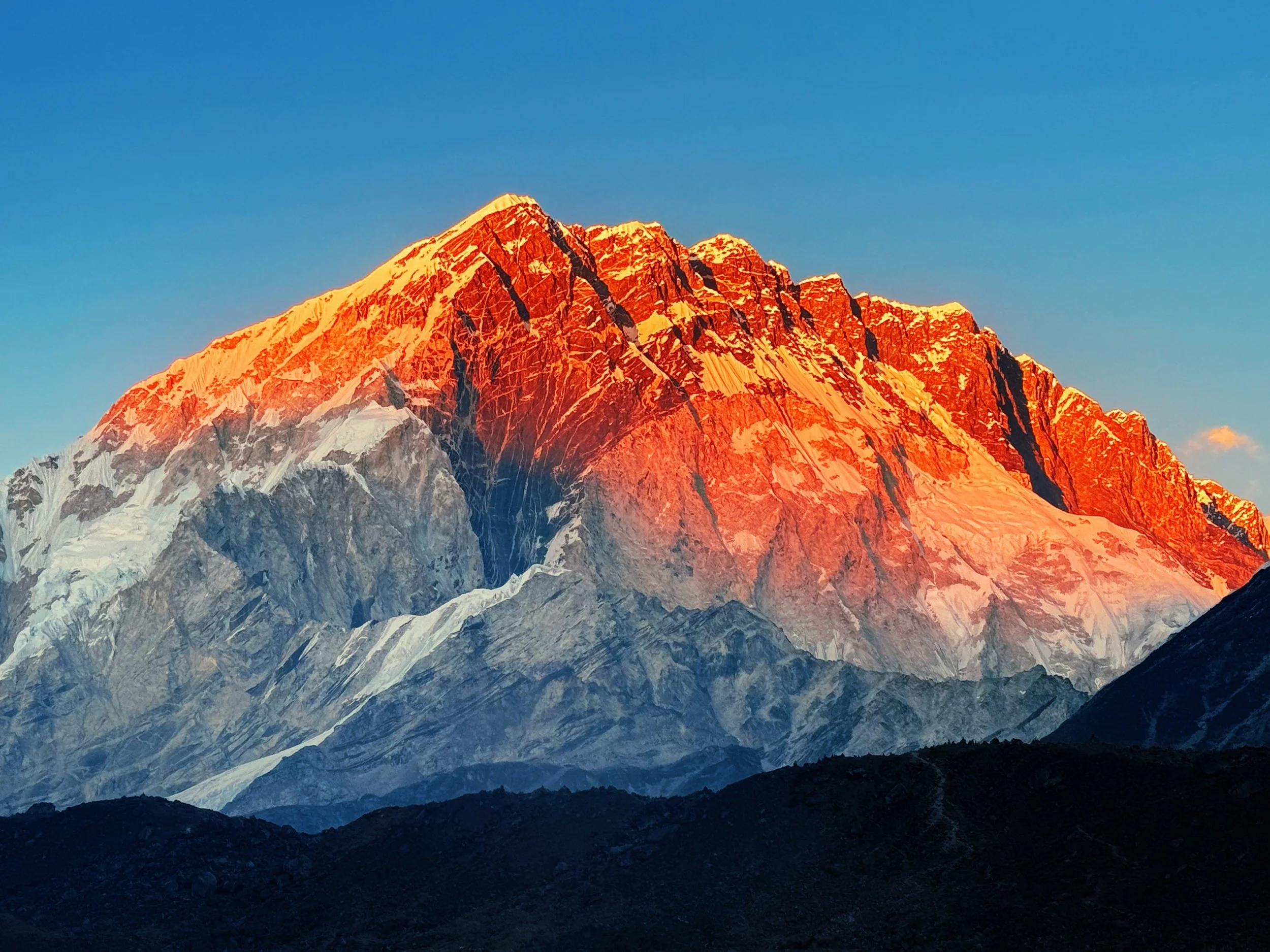
The trail rose steep and steady. Alvaro kept going. His cough worsened as the air thinned. Lobuche East towered above us, domineering, impossible. I kept looking up at it wondering how I was meant to climb that. Had I bitten off more than I could chew.
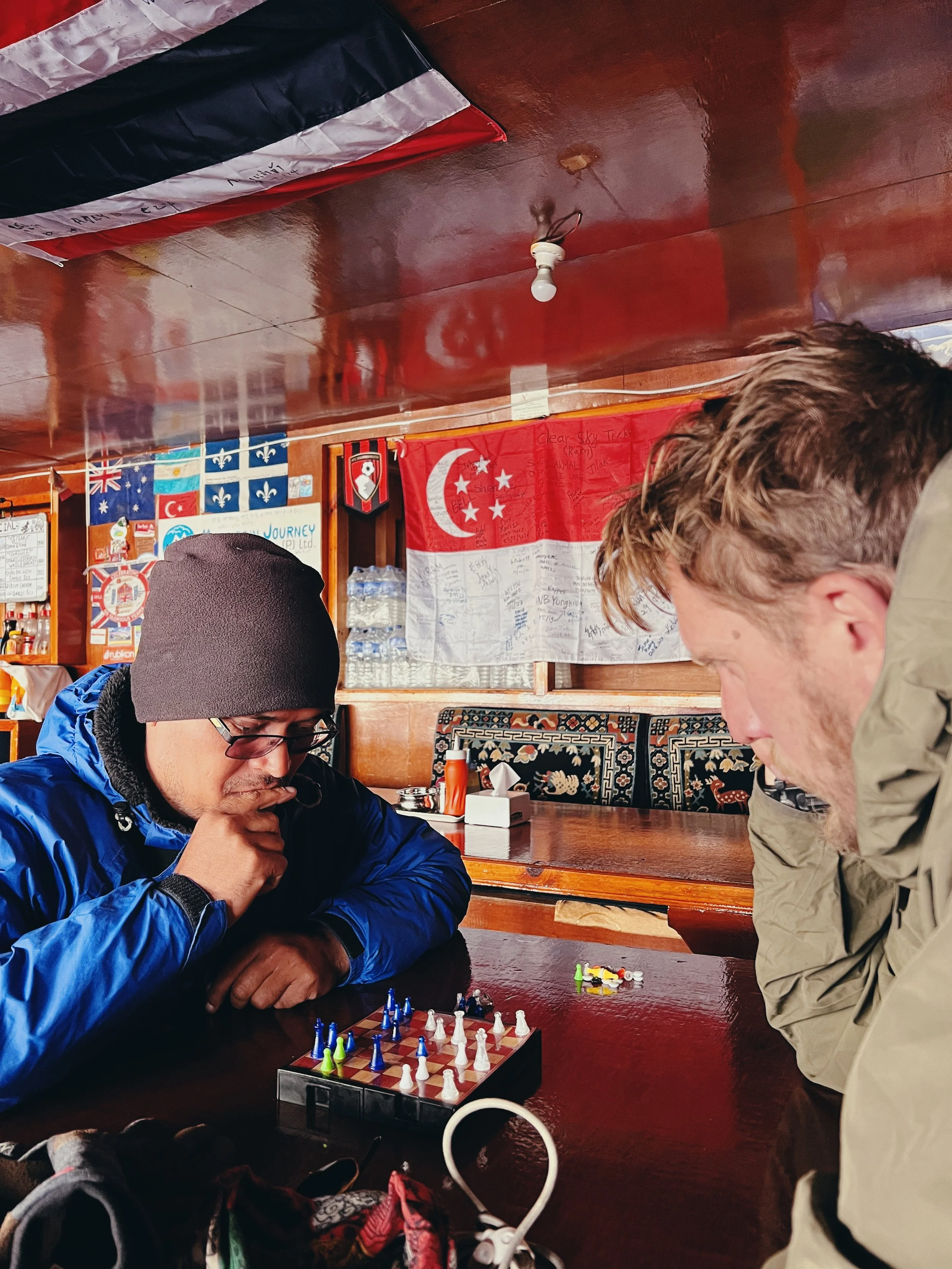
We reached Lobuche by sunset. There we ran into Baboo, the guide who had rescued Alvaro from my selfishness the day before. We played chess all night. Baboo obliterated me with gentle Nepali humour. He told us how he had been a Maoist rebel in his youth and once hid inside a rice jar for an entire day while government troops searched his village. He escaped by pretending to be blind and stumbling past the soldiers into the jungle. No wonder he beat me at chess.
Lobuche to Gorak Shep, 4900 to 5500 meters
Another night with no sleep. Headaches. Anxiety. Thin air clawing at my lungs. The bond between Alvaro and me strengthened in the cold. He was struggling but he kept moving.
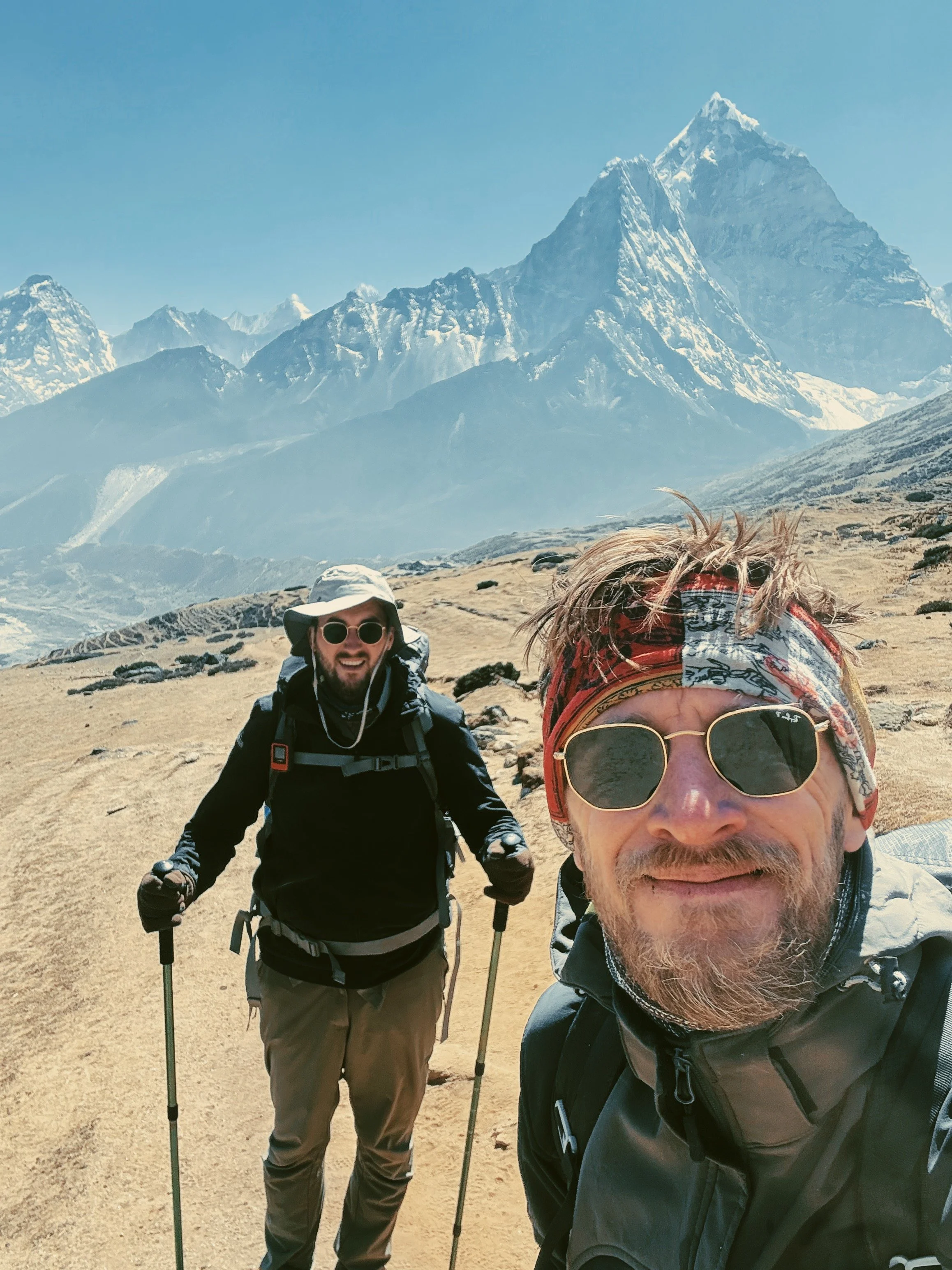
We reached Gorak Shep after a short climb and dropped our bags in an overcrowded guest house. Then we pushed on to EBC. The altitude hit us hard. Every step was slow and laboured even without packs.
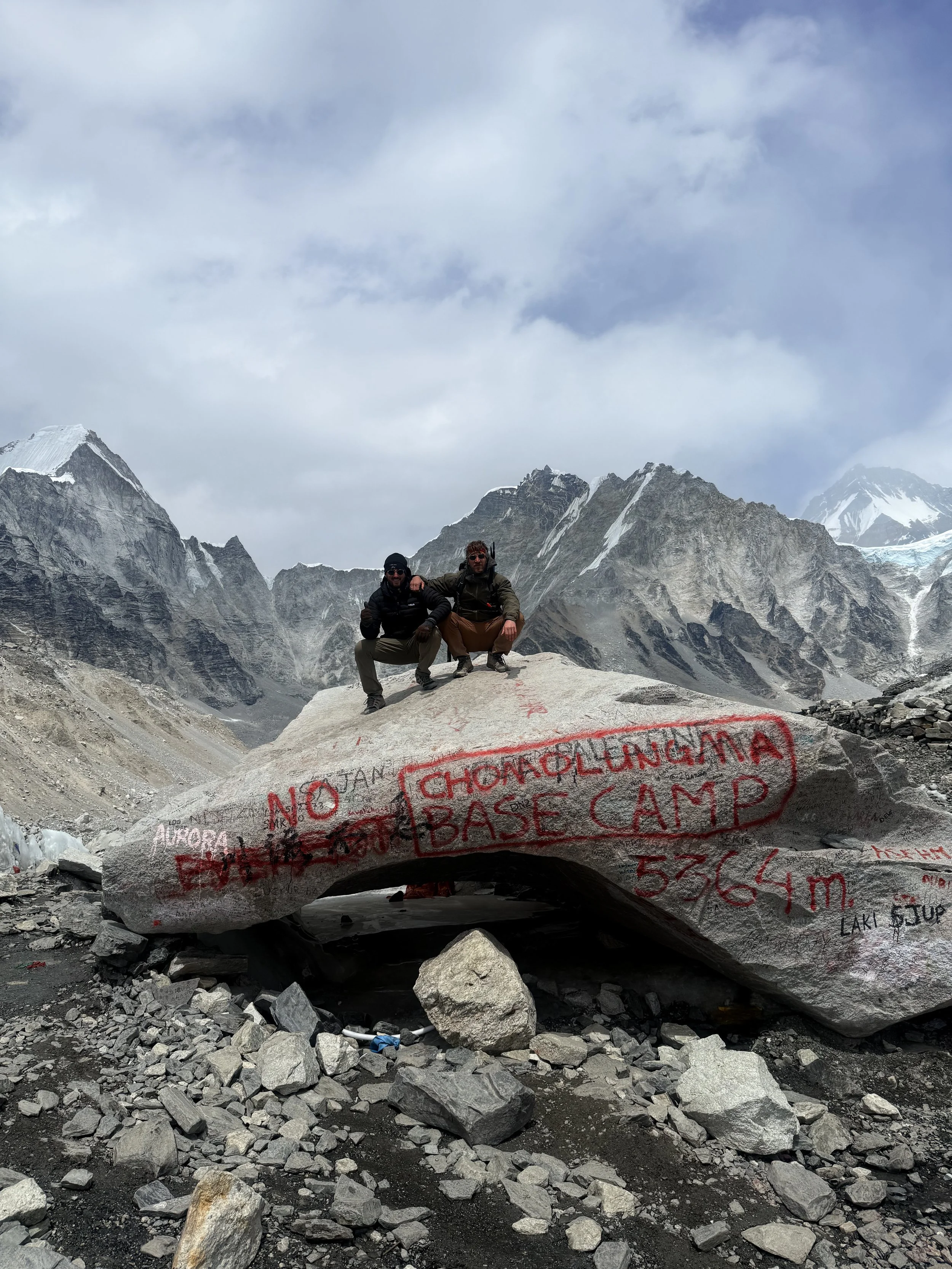
Everest Base Camp felt underwhelming. Crowded with selfie obsessed hikers. The famous rock marked the line between those who only reached this point and those who aimed for the summit. We waited in the queue for photos. I felt judgement rising again but checked it quickly.
A group of Ukrainians were there, crying, holding each other. An elderly woman in her seventies leaned on her sons, panting for breath. Her eyes were full of emotion. I thought of my father and how we had planned to climb Mont Blanc before dementia took him. My resentment softened. I promised myself that when fate took him I would scatter his ashes somewhere high.
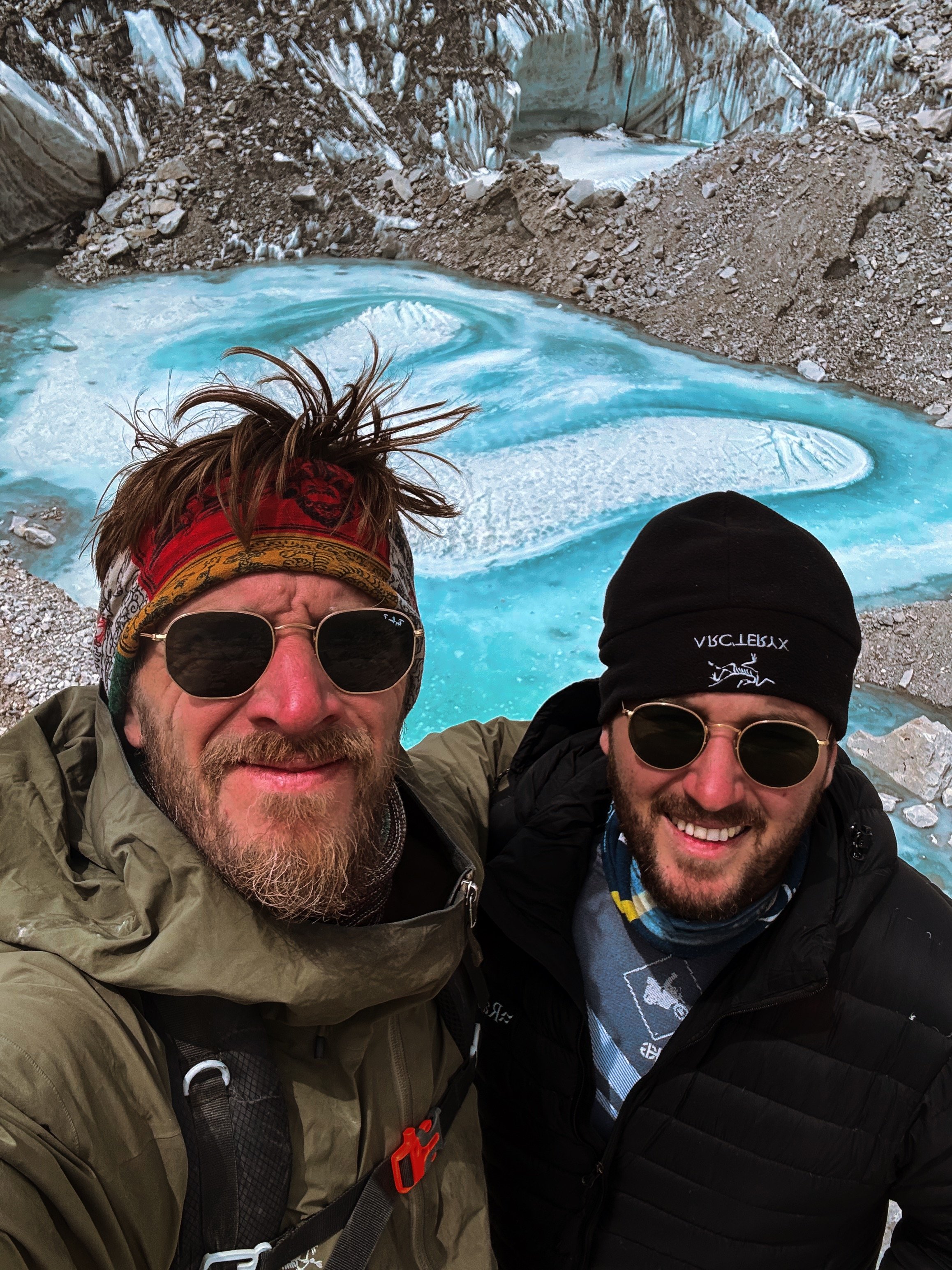
We took our pictures and headed back down. Alvaro’s cough had worsened and so had his anxiety. Altitude is physical, but when the air thins the mind begins to unravel. You meet your demons in the cold. It was time to get him lower.
Back at Gorak Shep we rested. Baboo showed us card tricks and laughed quietly at our astonishment. The next day we would descend together. Alvaro would go to Namche with Baboo. Baboo would drop me at Lobuche so I could attempt the summit. After that I would run down to Namche and we would ride our bikes back to Kathmandu together.
Needless to say I did not sleep that night.
Gorak Shep to Lobuche to High Camp
We set off early. I reached Lobuche in two hours and hugged Alvaro goodbye. I was proud of him. I had a few hours to kill before meeting my guide so I lay in a courtyard, meditated in the sun, and did yoga nidra to calm my breath. Lakhpa Sherap, the guide Mima had arranged, was late. Our wires were crossed. He thought we were leaving the next day. He was still in Dingboche.
In typical Nepali fashion he just grabbed his gear and ran up the mountain. He arrived a few hours later, lean and kind faced, breathing hard but smiling. Ready to go.
We climbed to High Camp at 5500 meters in an hour and a half. The pace was fast. I liked it. Lakhpa was testing me. I kept up. When we roped in for a short technical section he looked over his shoulder and said, You a strong man, good. He laughed. I almost cried. Praise from a Sherpa lands heavy.
We reached High Camp before sunset. Practiced some ropework. Ate Nepali porridge and soup with a few other climbers. I did more yoga nidra to calm myself and tried to sleep.
We would start the ascent at 0100 hours.